

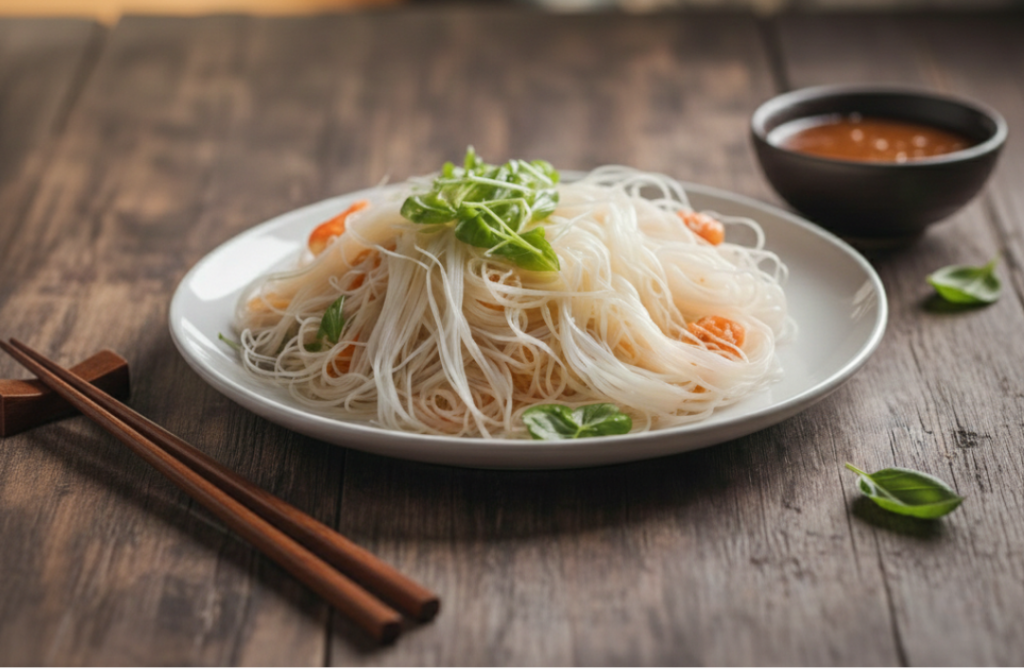
Source: PT Lyus Jaya Sentosa
“Vermicelli and Rice noodles are low-fat, low-calorie sources of carbohydrates. At first glance, they look almost identical, but there are actually significant differences between them in terms of texture, color, and primary ingredients.”
Noodles are a popular food staple across many Asian countries, including Indonesia. A wide variety of noodles are used in various dishes, one type being white noodles. In Indonesia, these white noodles generally fall into two categories—“rice noodles“ and “vermicelli“—both of which are frequently used as accompaniments to dishes like “meatball soup“ and “traditional soup“.
At first glance, the two appear similar due to their white color and chewy texture. However, “rice noodles“ and “vermicelli“ actually differ significantly in terms of their base ingredients, texture, and preparation methods. So, what exactly are the differences between “vermicelli“ and “rice noodles“? Read on to find out.
Know the Difference Between Vermicelli and Rice noodles
Here are the differences between “vermicelli“ and “rice noodles“ across various aspects:
1. Differences in Raw Materials
Although they may look similar at first glance, “vermicelli“ and “rice noodles“ actually differ fundamentally in terms of their raw ingredients.
“rice noodles“ is generally made from rice flour and water. In some products, tapioca or cornstarch is added to the mixture to create a chewier, softer texture when cooked.
In contrast, “vermicelli“ is made from mung bean starch, which yields a more transparent, chewy, and elastic texture. Besides mung beans, there are also varieties of “vermicelli“ that use potato or sweet potato starch as the base ingredient.
2. Difference in Texture
Beyond their raw ingredients, the difference between “vermicelli“ and “rice noodles“ can also be seen in their textures.
“rice noodles“ tends to have a more brittle texture and breaks easily when dry. However, once cooked, it becomes soft, smooth, and sufficiently springy, allowing it to easily absorb seasonings.
In contrast, “vermicelli“ has a stronger, more pliable texture when dry. After cooking, it feels thicker, slippery, and springy, with a more transparent appearance than “rice noodles“.
One of the factors determining the quality of “vermicelli“ is the production process and the raw materials used. High-quality “vermicelli“ generally has a strong texture when dry—resisting breakage—and remains springy and transparent after cooking.
For those seeking high-quality “vermicelli“, Sohun Kuda Laut is the ideal choice for both household needs and culinary businesses.
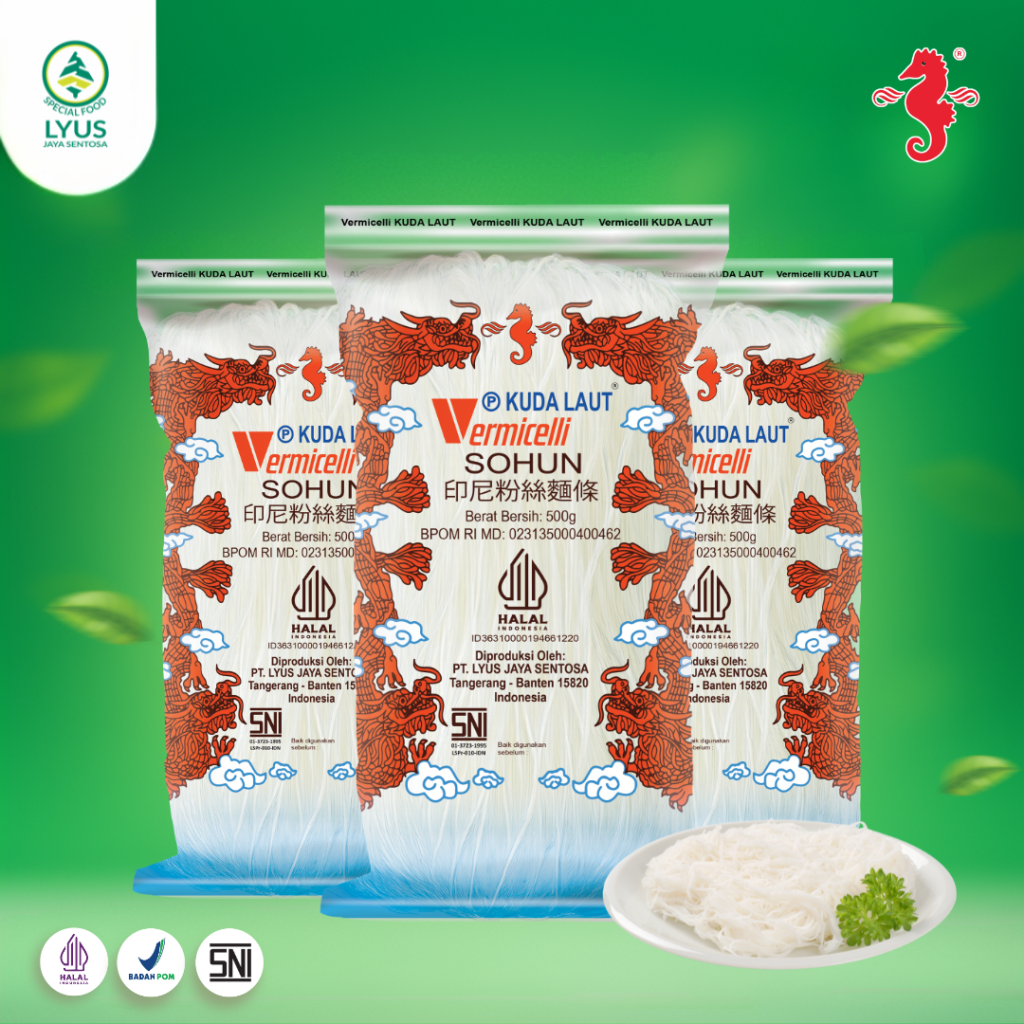
Produced using a standardized process, Seahorse Vermicelli feature a springy texture, effectively absorbing seasonings—making them ideal for dishes ranging from “meatball soup“ and “traditional soup“ to stir-fries and catering menus. They offer convenient preparation and consistent quality, culinary businesses that prioritize superior taste and quality every time.
3. Differences in Taste and Color
Since “rice noodles“ and “vermicelli“ are generally served as accompaniments to various dishes, many people often overlook the differences in their taste.
However, although the distinction is subtle, “rice noodles“ tends to have a slightly more savory flavor compared to “vermicelli“, which has a more neutral taste.
Differences are also apparent in their color; “rice noodles“ is typically yellowish-white, whereas “vermicelli“ is a brighter white and becomes transparent after cooking.
4. Differences in Processing Methods
Both “rice noodles“ and “vermicelli“ generally need to be soaked in warm water first to soften their texture and make them easier to prepare.
“rice noodles“ tends to soften more quickly in warm water, usually requiring only about 3–5 minutes before it is ready to cook.
In contrast, “vermicelli“ requires a slightly longer soaking time—approximately 5–7 minutes. Once soaked, “vermicelli“ also tends to become stickier and prone to clumping together.
To prevent this, “vermicelli“ can be soaked in cold water or tossed with a little oil after soaking; this helps maintain a loose texture and prevents excessive stickiness during cooking.
5. Comparison of the Nutritional Value of Vermicelli and Rice noodles
Because they are made from different raw materials, “vermicelli“ and “rice noodles“ naturally have nutritional profiles that are not entirely identical.
Nevertheless, both are recognized as good sources of carbohydrates with relatively low fat content, making them suitable additions to various everyday dishes.
To understand the differences in greater detail, the following information outlines the nutritional content of “vermicelli“ and “rice nooddles“ for comparison.
A 2-ounce (56-gram) serving of “vermicelli“ contains the following nutrients:
- Calories: 200 kcal.
- Protein: 6 grams.
- Fat: 1 gram.
- Carbohydrates: 44 grams.
- Fiber: 2 grams.
- Sodium: 5 milligrams.
Meanwhile, an equal serving of *bihun* has the following nutritional values:
- Calories: 190 kcal.
- Protein: 4 grams.
- Fat: 0.5 grams.
- Carbohydrates: 43 grams.
- Fiber: 1 gram.
- Sodium: 10 milligrams.
Which Is Healthier: Glass Noodles or Rice Vermicelli?
In terms of nutritional content, “vermicelli“ can be considered slightly superior to “rice noodles“. “Vermicelli“ generally contains relatively higher levels of protein, carbohydrates, and fiber, as well as lower salt content.
However, the nutritional difference between the two is not actually significant enough to definitively claim that one is better than the other. Both “rice noodles“ and “vermicelli“ serve as carbohydrate sources that are relatively low in calories, sodium, and sugar, making them suitable for inclusion in a balanced diet.
Those are some of the differences between “vermicelli“ and “rice noodles“, along with their nutritional information. So, which one do you prefer?


